dips spreads and sauces

You are currently browsing the archive for the dips spreads and sauces category.

I love peaches.

The summer after I graduated from college, I worked at a farmers market fruit stand, and after crawling out of bed bleary-eyed at 5:00 am on Saturday mornings and taking the bus up to a parking lot where I’d unload a truck and set up tables and a tent and load little baskets and set up signs, before the customers showed up, I’d rummage around in the crate of bruised peaches for a soft, dented, ugly, unsellable specimen and take a bite, letting the sticky juice drip down my arm.

It was, pretty much, the best breakfast ever.

Before that summer, I never knew that peaches are best when they are warm. That they are so much more fragrant and their flavor so much more complex after resting for a while in the back of a hot truck. That having a job where you can wipe off your sticky arm on your grubby jeans and have the option of getting paid in peaches is a pretty nice gig.

But I no longer have that job or those jeans. And peaches are a summer fruit, and we have already stepped into fall. And out of season peaches, when you find them, tend to be crunchy and tasteless, barely resembling the peaches I love.

So these preserves are my best attempt to bottle that fragrant sticky sweetness and put it up on the shelf within easy reach for toast.

Those ugly dented fruits are just fine in preserves, but if you have some slightly underripe ones they’ll work well too. When you add sugar, it doesn’t matter so much if they aren’t perfectly sweet, and the less ripe fruits have more natural pectin to help thicken things up.

I add no pectin here. But I do let the fruit macerate in sugar over night and then simmer them with a vanilla bean and a splash of elderflower liqueur.  It’s a loose style of preserves, with noticeable pieces of fruit remaining. If you prefer a thicker, more uniform jam, you can mash the fruit and cook it longer. It is also plenty sweet. If you intend to pair it with dessert in, say, brown butter peach bars, you might want to cut down on the sugar.

Peach Elderflower Vanilla Bean Preserves

Source: adapted from Russ Parsons in The Los Angeles Times

These preserves should be started at least eight hours before you want to make them, so I recommend prepping the fruit and allowing it to macerate overnight. You could, however, do it all in one day if you get an early start. They have a soft set, so don’t expect them to be as stiff and thick as commercial varieties. If you like things less sweet, you could reduce the sugar by anywhere from a half cup to a cup and cook them longer. The less sugar you use, the softer the set is likely to be. You can store these in the refrigerator for several weeks, or you can process them in a water bath (here are some guidelines) and store at room temperature for up to a year.

2 pounds of pitted, diced peaches
3 3/4 cups sugar
1 vanilla bean
1/4 cup St. Germain elderflower liqueur
juice of one lemon (about 2 tablespoons)

In a large nonreactive sauce pan, add peaches and sugar and cook over medium heat until the sugar is dissolved. Remove from heat, stir in the lemon juice. Transfer to a bowl (or other refrigerator friendly container), cover, and refrigerate overnight or for at least eight hours.

Wash canning jars in hot soapy water (or sterilize them in boiling water) and have them ready. Put a small plate into the freezer (this is for testing the set of the preserves).

Return the preserves to a heavy bottomed nonreactive sauce pan, slice the vanilla bean in half the long way and scrape out the seeds into the pan and add the scraped vanilla bean to the pan as well. Add the St. Germain and stir. Cook over medium-high heat, stirring constantly, until the preserves thicken, about 10 minutes. To test, drizzle a bit on the chilled plate. Allow it to cool for a minute, then run your finger through it. If the jam feels gel-like and holds the line, it’s ready to go. If it drips back into the middle, cook it for a few minutes longer and test again. When set, remove from heat and ladle into jars. Store in the refrigerator or process in a water bath.

Yield: about 5 cups

  • Share/Bookmark

The market has been full of beautiful peppers. The usual bell peppers in red, orange, yellow and green, jalapeños, Hungarian wax, Trinidadian perfume, poblanos, and fiery habañeros.

They are bright and inviting, but to be honest, I hardly know what to do with most of them. Oh, I use bell peppers in all sorts of ways, and I throw jalapeños and serranos into salsas and guacamoles, and I use the occasional Thai bird chile in a stir fry (and I’ve even gotten reasonably adept at what to do with the dried varieties, but that’s another story). But there is a vast world of chiles and peppers I’ve never cooked with. I’ve optimistically brought home baskets of them only to find shriveled specimens lying sadly in the bottom of the refrigerator a few weeks later.

But this year I was determined to expand my pepper universe, at least a little.

And when I came across Melissa Clark’s recipe for a hot sauce based on Sriracha, I knew I had to give a go. I returned from the farmers market armed with habañeros and red bell peppers and a bulb of New York white garlic and went to work.

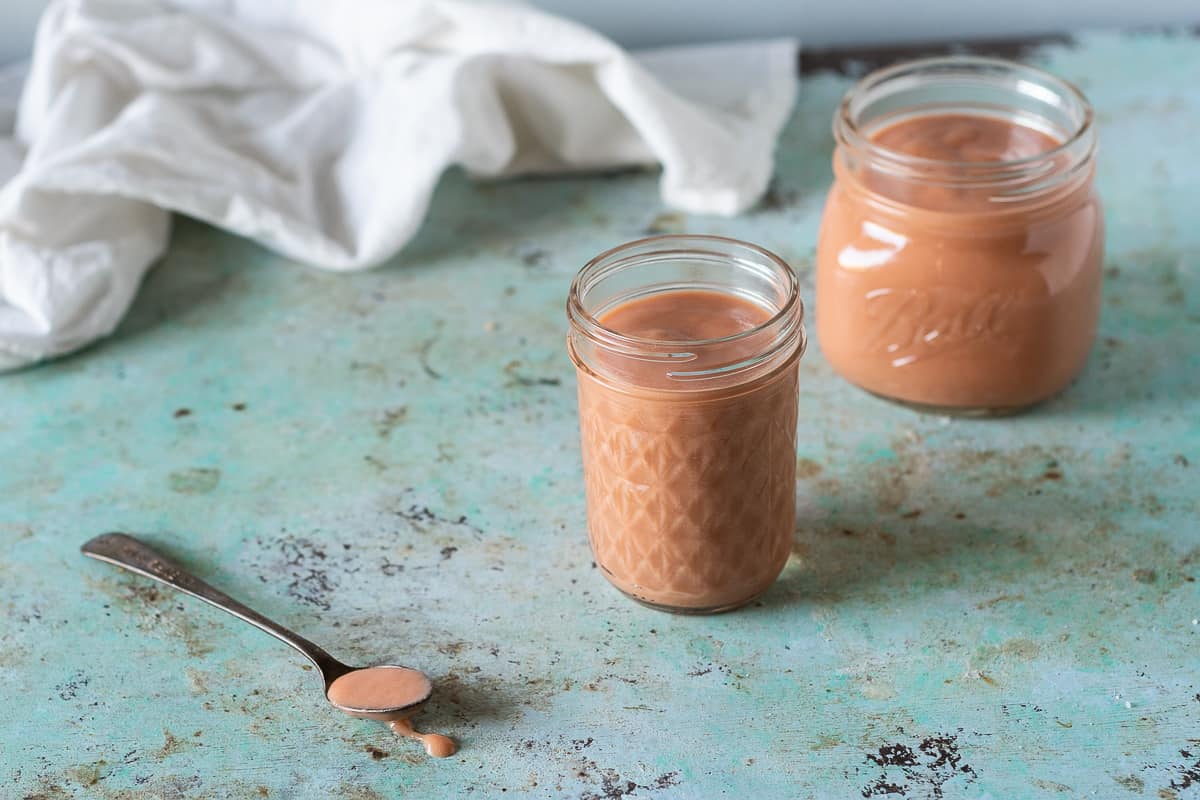
It was surprisingly easy (I don’t know why I imagined it would be difficult…). After about ten minutes of chopping and ten minutes of cooking (and several days of resting) I had two lovely little jars of fiery orange-red sauce.

This stuff packs a wallop. It is, to my tastebuds at least, significantly hotter than Sriracha. But it is also brighter and more complex.

Next time, I might leave out the habañero seeds for something a little tamer. But heat fiends will love it as is. And since it keeps for a long long time in the refrigerator, I can enjoy it in small quantities without worrying that it will go to waste.


Garlic Habañero Hot Sauce

Source: adapted from Melissa Clark in The New York Times

It is a good idea to use a pair of latex gloves when handling peppers this hot, and avoid inhaling the fumes when the peppers are cooking. This hot sauce is spicier than the Sriracha that inspired it, so use start small when adding it to a dish–you can always add more later. Those looking for a slightly tamer hot sauce should remove the seeds and white parts of the habañeros before adding them to the sauce pan.

4 habañeros
2 medium red bell peppers
5 cloves of garlic
3/4 cup white vinegar
1 teaspoon kosher or sea salt

special equipment: latex gloves

Roughly chop the bell peppers and garlic. Wearing latex gloves, chop the habañeros. Remove the seeds for a moderately hot sauce, leave them in if you like things extra hot.

In a medium nonreactive sauce pan with a lid, add the peppers, garlic, and white vinegar. Bring to a boil (take care not to inhale the fumes), turn heat down to low, cover, and simmer for about 10 minutes or until peppers are pierced easily with a knife.

Remove from heat, stir in salt, and puree with an immersion blender (or in a standard blender). Pour into two 8-ounce jars or one 16-ounce jar. Allow to cool before covering. Chill in the refrigerator for a week before using.

Keeps for months in the refrigerator.
Yield: about 2 cups.

  • Share/Bookmark

cranberrycurd1_blossomtostem

We are in the bleak mid-winter in Chicago, the ground crusted with snow, the wind face-bitingly, finger-numbingly cold. Apart from the rare bit of blue sky peaking out at us today, we have been living in a pallet of whites and muted grays.

I am getting tired of pilling scarves and hats and salt stained shoes. I am wearying of winter’s dinge.

I have been subsisting on one warm bowl after another filled with chilis and curries and ribollitas, ladled over rice or sopped up with bread. But as much as I love these comfort foods, I am ready for a break from them too. I’ve been longing for something vibrant, with a rich saturated hue and a bold flavor to cut right through the winter doldrums.

That’s where cranberries come in. These deep red beauties are still hanging around in the produce section of my supermarket, looking lonely in the wake of the holidays.

After sputtering in a pot, slipping out of their skins, simmering with sugar and a vanilla bean and a splash of Cointreau, and then being rounded out and thickened with a couple of eggs, these tart red berries are tickled into a luxurious velvety pink curd.

I think of cranberry curd as winter’s rosy cheeks, if such a thing could be jarred and spread on lemony muffins or cornmeal pancakes or whole wheat toast, or sneaked in little spoonfuls all by itself. It isn’t a summer jam, but a rich smooth sweet spread, with notes of vanilla and orange and just a hint of a pucker. Just the thing to brighten a buttery croissant and a mug of hot coffee on a mid-winter Sunday morning.

Cranberry Curd

Source: adapted from Nigella Lawson’s How to be a Domestic Goddess

This luxurious, brilliant pink curd is a cinch to make. Cranberry’s natural acidic tartness is tamed here into something sweet and round, but the berry’s bright fruit flavor remains strong. It would be right at home on a holiday table, but it really shines as an accompaniment to a simple breakfast or dessert. If you want to make this beyond the season when cranberries are available in the grocery store, stock up on a few extra bags and throw them in the freezer where they’ll keep for months.  

2 1/2 cups (8 ounces) fresh or frozen cranberries
1/2 cup water
2 tablespoons unsalted butter
1 cup sugar
2 tablespoons Cointreau
1 vanilla bean, split lengthwise or 1 teaspoon vanilla extract
2 eggs
fine mesh strainer or food mill

In a medium saucepan, heat the cranberries and water over low heat until the cranberries pop and split open. Press the cranberries through a fine mesh strainer or food mill, discard the solids, and return the puree to the saucepan. Add sugar, butter, vanilla bean (or extract), and cook over a low gentle heat until the sugar dissolves and the butter melts into the puree. Remove the vanilla bean and scrape the seeds into the puree (if you like, you can rinse and dry the bean and save it for another use). Remove the pan from the heat and allow it to cool slightly. Beat the eggs in a separate bowl. Add a little of the warm cranberry mixture to the eggs (this is to gently warm the eggs to prevent the eggs from curdling on contact with the hot mixture). Add the egg and cranberry mixture to the saucepan. Cook over low heat, stirring constantly, until the mixture thickens enough to coat the back of a spoon. Be careful not to curdle the mixture by raising the heat too high.

When the mixture is thickened, push it through the mesh strainer, and allow it to cool before putting it into jars and refrigerating.

Yields about 2 1/2 cups of cranberry curd. Keeps in the refrigerator for several weeks.

  • Share/Bookmark